

Proposing an Article
What is the Article Proposal?
The article proposal is an essay outline for the purposes of applying to an author position. You can plan your article and outline to be as long or short as you'd like, but generally our articles range from 1500 to 3500 words overall, so your proposal should lay out a framework that can generally support that word count. However, we're happy to have a variety of article lengths to suit the varying time commitments of our readers—if you have a compelling topic or take, go for it!
Topics to Avoid
When choosing a topic, try to be as specific as possible and avoid suggesting topics we've already covered. For example, we have had many articles covering the topic of Alzheimer's Disease, but each one has been about a specific treatment or new discovery about the disease, with little overlap between articles aside from their introductions. To find out which topics we've already covered, you may see our chart here.
Outline
In the outline itself, we look for the following:
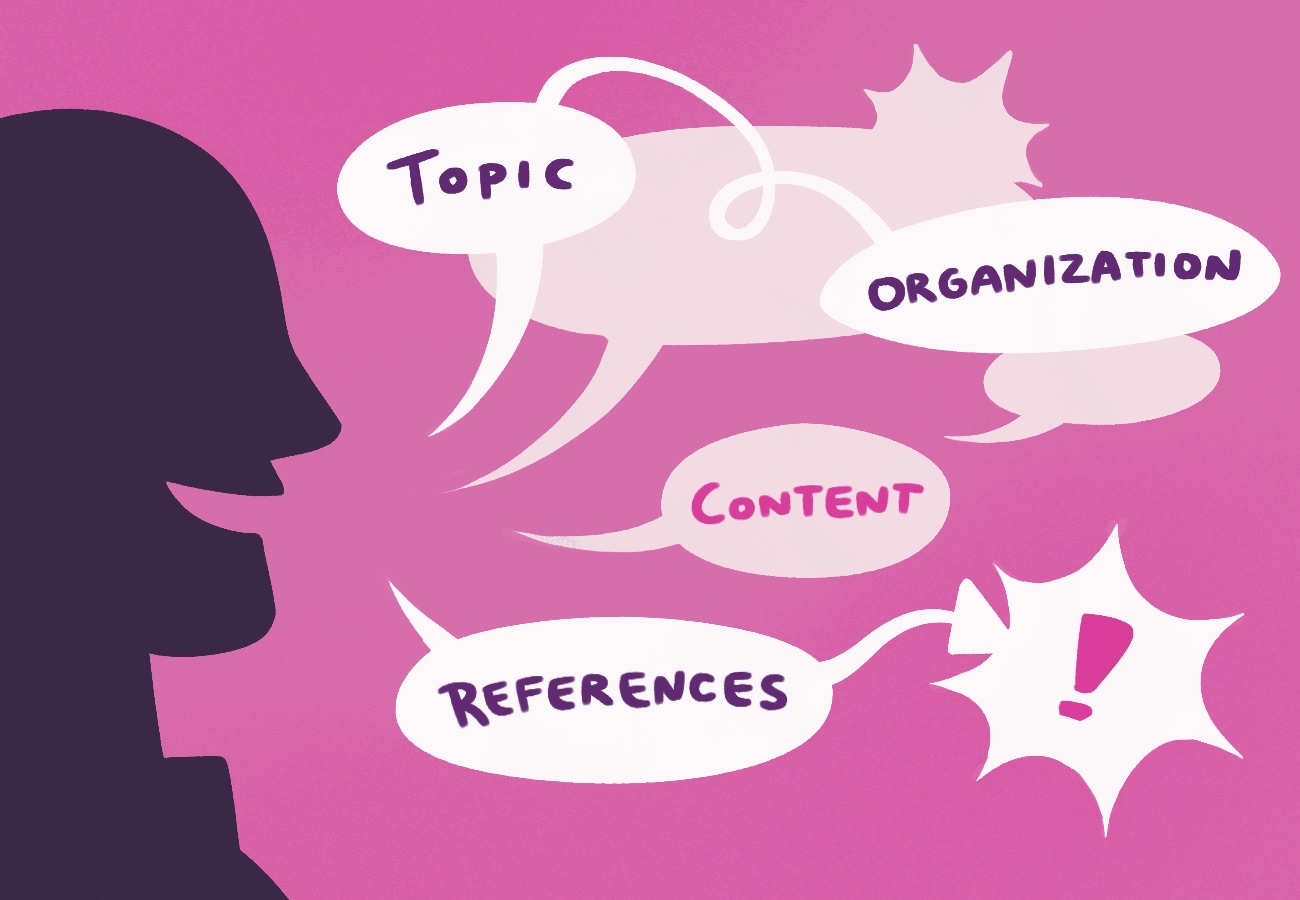
- Level of detail: The outline should be bullet pointed in format, but should effectively summarize all of the information you plan to include in your article. Make clear what the main ideas of each section and paragraph are going to be. It should be easy to see what your main discussion is and how the parts of your article tie into it.
- Organization: Even at the planning stage, the different sections of your article should flow logically into each other and be well-ordered. They should also be different enough that they aren't intermixing information, and each should be discussing their own area of your article's topic.
- Content: We take scientific accuracy very seriously; the primary goal of our journal is to communicate science to the public in an accurate way that doesn't sensationalize it the way the mainstream does. Be careful about making blanket statements or overgeneralizing beyond what your sources say. Additionally, cite reputable scientific sources. If your proposal is accepted, the article content will eventually be overviewed by our Graduate Student Review Board, which aims to correct potential inaccuracies.
References
All sources must be peer-reviewed scientific literature or official publications from reputable institutions. Avoid citing news articles, general websites, or outdated research that no longer reflects current scientific consensus. We generally prefer sources published within the last 10 years to ensure readers receive the most up-to-date information. Additionally, we recommend choosing articles from journals with an impact factor of 2 or higher, as this reflects a higher standard of scientific review and credibility. You can easily check a journal’s impact factor with a quick online search.
If you’re new to scientific research, understand these flags when choosing scientific sources.
Red Flags
- The article claims to cure a disease.
- The article claims that preceding scientific dogma was incorrect.
- There are not many peer-reviewed articles on your topic.
- The source is a doctor or researcher’s personal blog.
- The paper has a retraction notice on the journal website.
Yellow Flags
- The article is a “pop-science” article. Rather, read the original cited publication and interpret it in your own words than relying on someone else’s secondhand interpretation.
- The article is written by a doctor not currently in practice. If they are older, retired, or in an administrative capacity, this is probably fine! However, if their own blog, website, or publicity talks about non-mainstream science, then that’s not a good sign.
- The source is a letter to the editor or an opinion piece in a major journal. If it includes a number of peer-reviewed sources, use it to inform your argument but focus mainly on the cited scientific sources.
Green Flags
- The article is from a peer-reviewed journal with a high impact factor.
- The article contextualizes the small step it provides to its larger field.
- The article is cited by other articles about the topic that were published later in reputable journals.
Where to Source From
We recommend sources and databases like PubMed, Google Scholar, Nature Neuroscience, Cell, Neuron, and other large journals!
Example Sample Outline
View our sample outline to get a better sense of what we’re looking for in an article proposal! This will really help give your application a competitive edge.